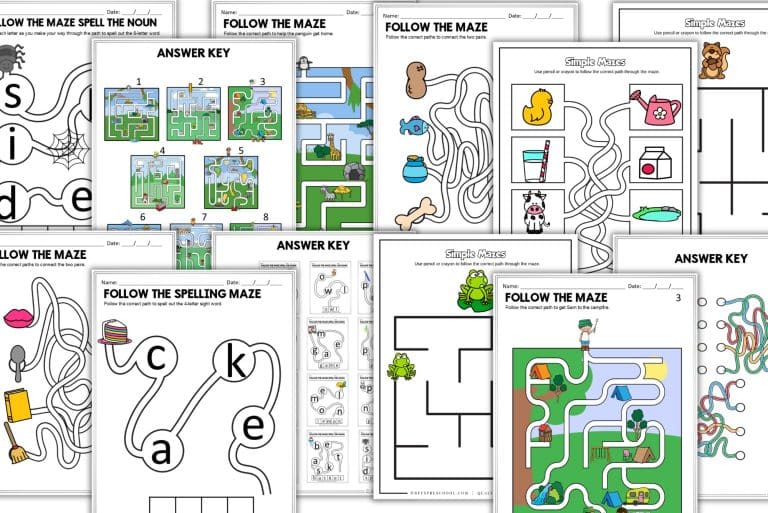
Tracing: Building Fine Motor Skills & Focus Through Fun!
Helping young children develop fine motor skills, pencil control, and focus doesn’t have to be a struggle. Our Tracing Paths resource is specifically designed to make learning enjoyable for preschoolers and kindergarteners, transforming foundational handwriting practice into an engaging and rewarding experience. With a variety of tracing patterns, this resource is perfect for teachers, parents, and caregivers aiming to build essential early skills through a hands-on, child-centered approach.
In this post, we’ll explore the benefits of tracing activities, how to use Tracing Paths in your classroom or at home, and why these worksheets are a valuable tool for early learning.
Tracing is one of the first steps in preparing children for writing. It involves more than just drawing lines—tracing builds crucial skills that lay the foundation for future handwriting success.

Key Benefits of Tracing Paths
- Strengthens Fine Motor Skills: Tracing helps develop the small muscles in children’s hands and fingers, which are essential for a proper pencil grip.
- Builds Hand-Eye Coordination: Following a path with a pencil requires focus and visual coordination, which improves over time as children practice.
- Encourages Focus and Patience: Completing a tracing line requires children to concentrate and work carefully, building their ability to stay focused on a task.
- Prepares for Handwriting: Tracing lines, curves, and patterns helps children gain control over a pencil, getting them ready for more complex writing tasks.

When it comes to preschool and kindergarten readiness, tracing activities are invaluable. Tracing Paths provides diverse tracing patterns to keep children engaged while they practice key skills. This resource is designed to be straightforward and flexible, making it suitable for use in classrooms, homeschooling, or daycare settings.
What’s Included in Tracing Paths
- Diverse Patterns: Straight lines, curves, shapes, and zig-zags to develop a wide range of motor skills.
- Progressive Difficulty: From simple paths to more intricate patterns, allowing children to progress at their own pace.
- Print-Friendly Design: Easy-to-print sheets that are ready for use, saving educators and parents time on preparation.
With simple, easy-to-follow activities that focus on tracing lines, shapes, and letters, these worksheets will boost your child’s hand-eye coordination, manual dexterity, and pencil control—all while making learning fun. A great addition to any pre-k or kindergarten lesson plan, this resource is perfect for classroom or at-home practice!
With consistent practice, your child will build the skills necessary for a smooth and successful transition into kindergarten, setting them up for success both academically and socially.
Tips for Success with Tracing Activities
- Start Simple: Begin with straight lines and basic shapes, then gradually introduce more complex patterns as children grow comfortable.
- Celebrate Progress: Let children know they’re doing well! Positive reinforcement, like a “tracing champion” sticker or stamp, can boost their confidence.
- Encourage Good Pencil Grip: Remind children to hold their pencil correctly, gently guiding their hand if needed.
- Rotate Colors: Keep tracing interesting by letting kids choose different colors for each line or pattern.

Ready to give your students a head start on fine motor skills and handwriting? Download our Tracing Paths resource today and watch your little learners gain confidence, focus, and control with every line they trace.